
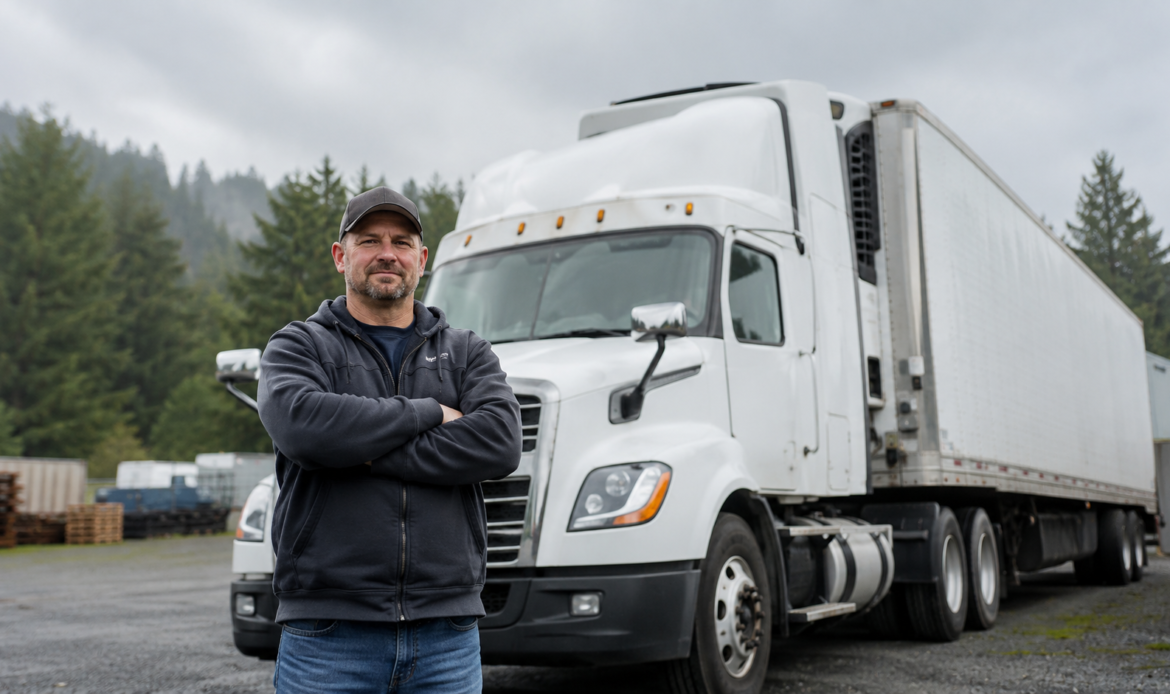
How to Become a Reefer Truck Driver in Washington State: Career Guide 2026
Becoming a reefer truck driver in Washington State is one of the smartest moves available to anyone entering commercial driving today. Every grocery shelf, every restaurant cooler, and every pharmacy refrigerator in the Pacific Northwest depends on temperature-controlled trucking being handled reliably, on schedule, every single day.
Whether you are starting from scratch, already hold a Class A CDL, or are looking to specialize in refrigerated freight, this guide walks through exactly what it takes to become a reefer driver in Washington in 2026.
What Does a Reefer Truck Driver Do?
A reefer truck driver operates a tractor pulling a refrigerated trailer (reefer unit) designed to maintain a specific temperature range from pickup to delivery.
Unlike standard dry van driving, reefer trucking requires monitoring setpoint temperatures, managing pre-cooling, and understanding how different commodities — seafood, produce, dairy, pharmaceuticals — need to be handled in transit.
Because of these added responsibilities, carriers value reefer drivers more highly than general dry van operators.
Why Becoming a Reefer Truck Driver in Washington Is a Smart Career Move
Washington sits at the center of one of the busiest cold chain corridors in the country. A career as a reefer driver here helps you:
-
Earn steadier income, since food and pharmaceutical freight keeps moving even during economic slowdowns
-
Access a pay premium many carriers offer over standard dry van rates
-
Choose between local, regional, or over-the-road routes depending on your lifestyle
-
Build stronger job security, since skilled reefer drivers are harder to find than general CDL holders
Carriers that depend on cold chain logistics actively compete to hire and retain good reefer operators, which gives drivers real leverage in the job market.
Key Steps to Becoming a Reefer Truck Driver in Washington
Step 1: Meet the Basic Eligibility Requirements
Before starting CDL training, you need a valid Washington driver’s license, and you must be at least 18 for intrastate driving or 21 for interstate driving — and since most reefer routes cross state lines, 21 is the practical minimum.
You will also need a DOT physical and Medical Examiner’s Certificate, proof of citizenship or lawful permanent residency, and a clean driving record, since Washington reviews several years of driving history before approving an application.
Step 2: Get Your Commercial Learner’s Permit (CLP)
The Commercial Learner’s Permit (CLP) is the learner’s permit equivalent for commercial vehicles. After studying the Washington CDL manual and passing the required knowledge test at a Department of Licensing office, you’ll receive a CLP valid for 180 days, renewable once.
While holding a CLP, you can only drive a commercial vehicle while supervised by a fully licensed CDL holder seated beside you.
Step 3: Complete Entry-Level Driver Training (ELDT)
Federal law requires every first-time Class A CDL applicant to complete training through a provider listed on the FMCSA Training Provider Registry. Washington also requires a minimum of 160 training hours for Class A, covering both classroom theory and behind-the-wheel instruction.
Always verify a school’s registry status before paying tuition — if the provider isn’t listed, the Washington DOL will reject your application.
Step 4: Pass the CDL Skills Test
The final step is the CDL skills test, made up of a pre-trip vehicle inspection, backing maneuvers, and an on-road driving evaluation. Once you pass, the Washington DOL issues your full Class A CDL, valid on the same six-year renewal cycle as your regular driver’s license.
Step 5: Build Reefer-Specific Skills
A Class A CDL qualifies you to drive — but reefer trucking rewards drivers who go further: understanding temperature monitoring, pre-cooling procedures, proper load airflow, and basic FSMA food safety requirements.
Drivers who also know Pacific Northwest mountain passes and seasonal weather patterns are far better equipped to protect cargo temperature on every run.
What You Can Expect to Earn as a Reefer Truck Driver
Compensation varies by experience, route type, and carrier — but Washington consistently ranks among the higher-paying states for commercial drivers nationwide.
Many carriers, including Arctic Transportation, layer performance bonuses and mileage-based pay on top of base rates, allowing experienced reefer drivers to grow their earnings significantly over time.
Red Flags to Avoid When Choosing a Training School or Carrier
Not every CDL training school or carrier operates with the same standards. A school not listed on the FMCSA Training Provider Registry will leave you unable to get licensed at all, no matter how much you’ve already paid.
On the carrier side, watch for vague pay structures, poor dispatch communication, and reefer equipment that isn’t well maintained — all signs that temperature-sensitive freight, and your paycheck, may be at risk.
Why Drivers Choose Arctic Transportation
For drivers looking for a dependable carrier to build a reefer trucking career with, Arctic Transportation has been moving temperature-sensitive freight across the Pacific Northwest since December 2013.
Our approach focuses on:
-
Modern, well-maintained reefer equipment
-
Competitive, mileage-based pay with performance incentives
-
A dispatch team that actually communicates
-
Both regional and over-the-road route options out of our Pacific, WA terminal
At Arctic Transportation, we understand that a driver’s success and our cargo’s integrity are directly connected — which is why we invest in our drivers as much as our equipment.
Conclusion
Becoming a reefer truck driver in Washington State takes a clear sequence of steps — from your CDL training through developing the specialized skills that set reefer drivers apart.
If you’re ready to start — or already hold a Class A CDL and want to specialize — Arctic Transportation is hiring reliable, detail-oriented reefer drivers across our Pacific Northwest network. Reach out to our recruiting team to discuss open positions.
